TD: Scaling Threat Detection Platform
Enterprise Cybersecurity Platform · B2B SaaS · Design System
TD is an enterprise platform built to help security teams discover, share, and deploy threat detection content. The product brings together research, detection rules, and operational workflows into a single system used by SOC teams working in high-pressure environments. I joined as the sole designer and took full ownership of the product experience from day one — through the entire product development cycle.
Role:
Product Designer (Sole Designer)
Context:
Cybersecurity / Enterprise B2B SaaS
Timeline:
2017 — 2020
Key Impact:
~60% user base growth · Design system from scratch · Full product ownership
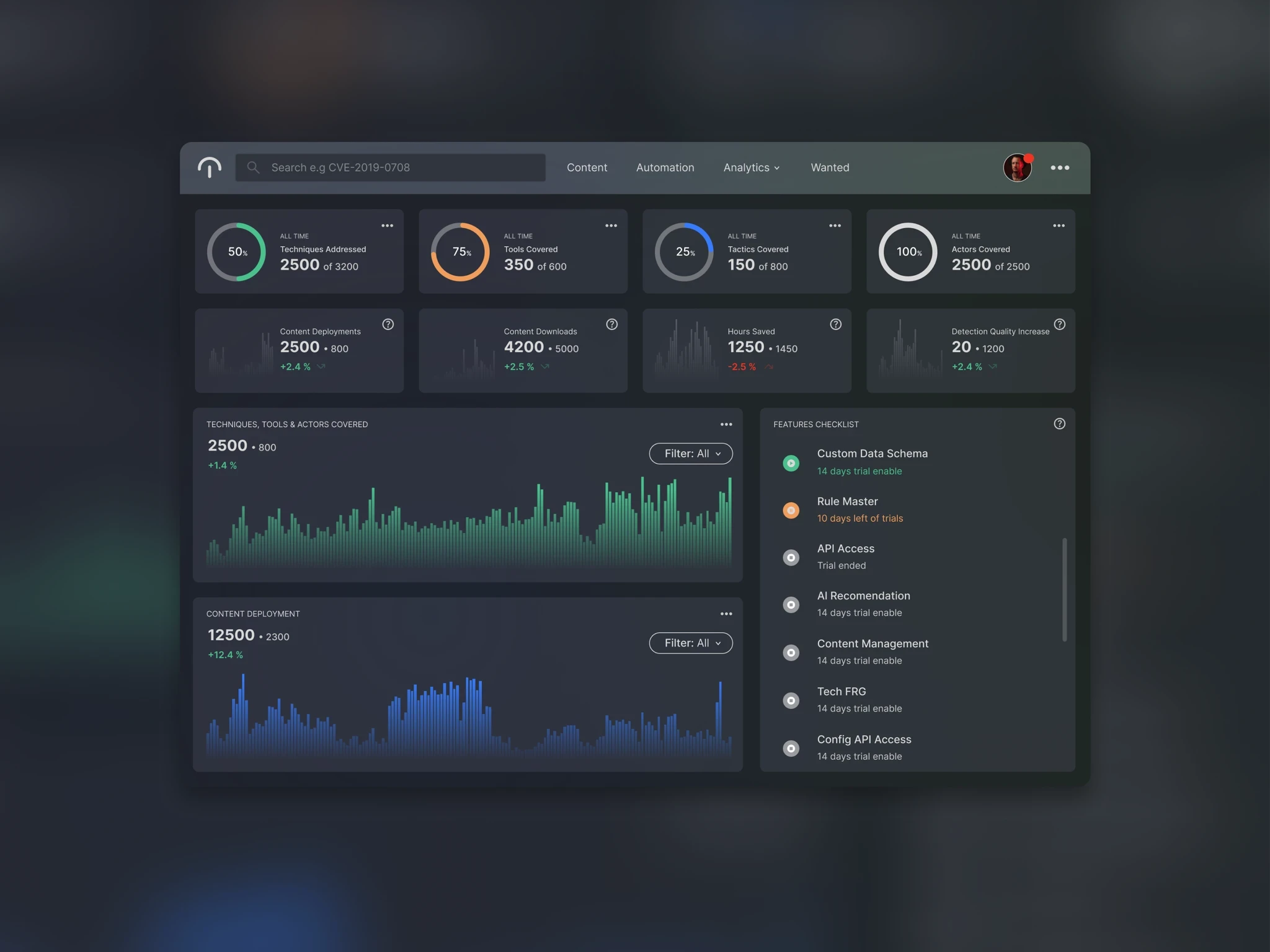
When I joined, the product had no design foundation. The interface was built directly by engineers using an outdated version of Bootstrap — functional, but inconsistent, visually fragmented, and with no clear direction for how it should evolve. There was no designer before me, which meant no design system, no established patterns, and no shared understanding of what the product should look like as it scaled. The challenge wasn't just cleaning up what existed — it was defining what the product needed to become. A complex, data-heavy platform for security professionals working in high-pressure environments. The main structural problem was scale: large rule sets, dense detection logic, and users who needed clarity and speed rather than visual polish. As the sole designer, I was responsible for the entire product experience end to end. This meant conducting UX research, defining user flows, designing core interfaces across the platform, and iterating based on feedback from both users and the engineering team. Working directly with engineers through the full development cycle meant designs had to be realistic, well-reasoned, and easy to implement. I introduced a design system from scratch to create consistency across modules and support faster development — establishing shared patterns that reduced fragmentation as the platform grew. Over time, the product moved from a patchwork of engineer-built screens to a cohesive, scalable interface built on repeatable components and clear interaction logic.
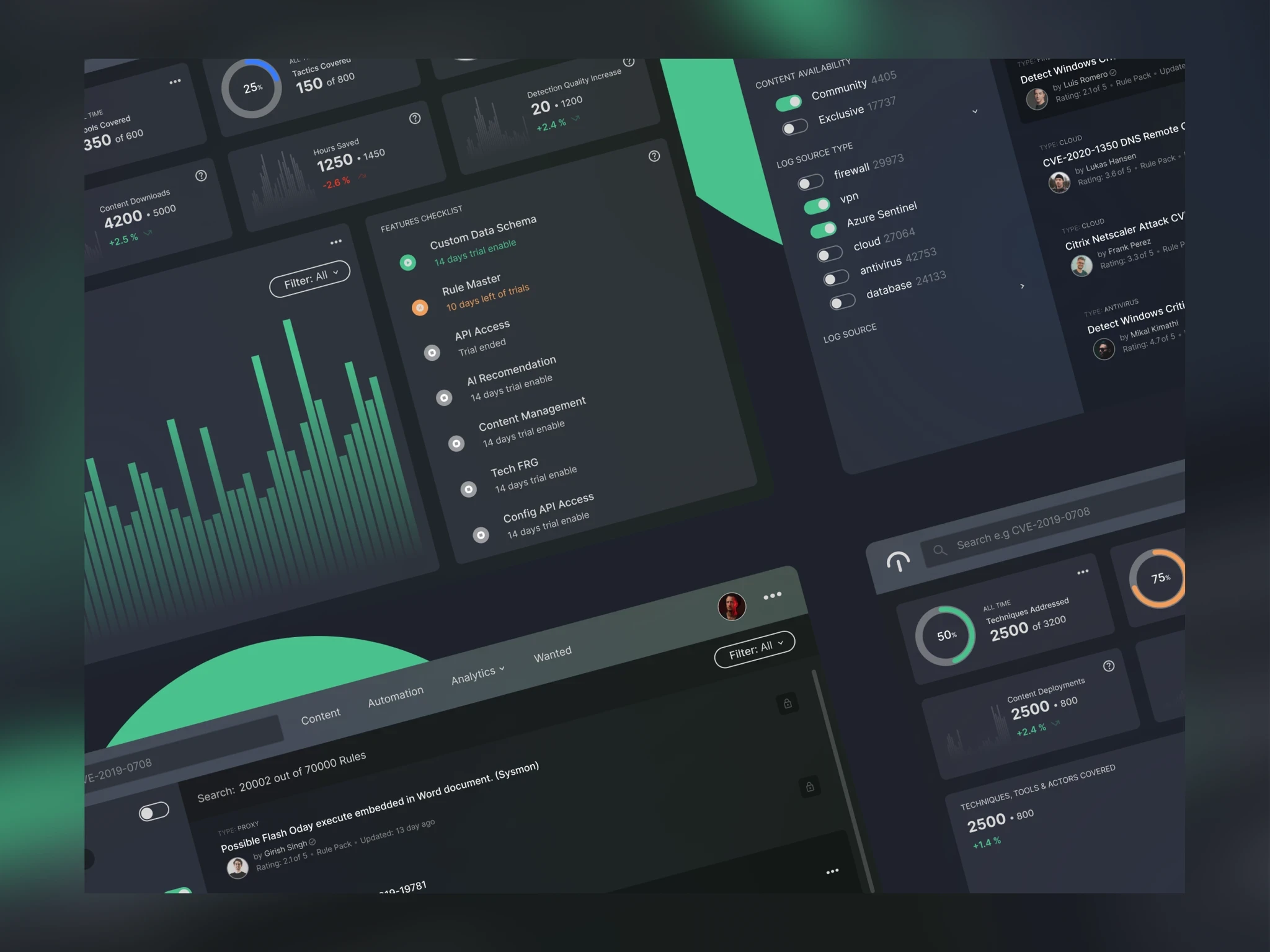
The platform grew steadily throughout my tenure. The design system reduced visual inconsistency across modules and helped the team move faster without sacrificing quality. This contributed to a ~60% increase in the user base during the period. Working as a sole designer in a fast-paced startup environment meant taking full ownership of every decision — from information architecture to component design — with no design team to fall back on. That constraint pushed a level of thoroughness and cross-functional collaboration that shaped how I approach complex products today.