F1 Kickoff — Navigation Architecture
Mobile App · Information Architecture · Design System
Kickoff is a premium football media platform for serious fans — exclusive editorial, in-depth analytics, and live podcast streams with a Clubhouse-style participation model. Subscribers can request to join broadcasts in real time. Access is paid and gated behind user verification. The platform had strong content. What it didn't have was a scalable interface to deliver it.
Role:
Lead UX Designer / Design Manager
Context:
Sports Media / Premium Subscription / Mobile
Timeline:
2023
Key Impact:
IA from scratch · Design System foundation · Prototype ready for user testing
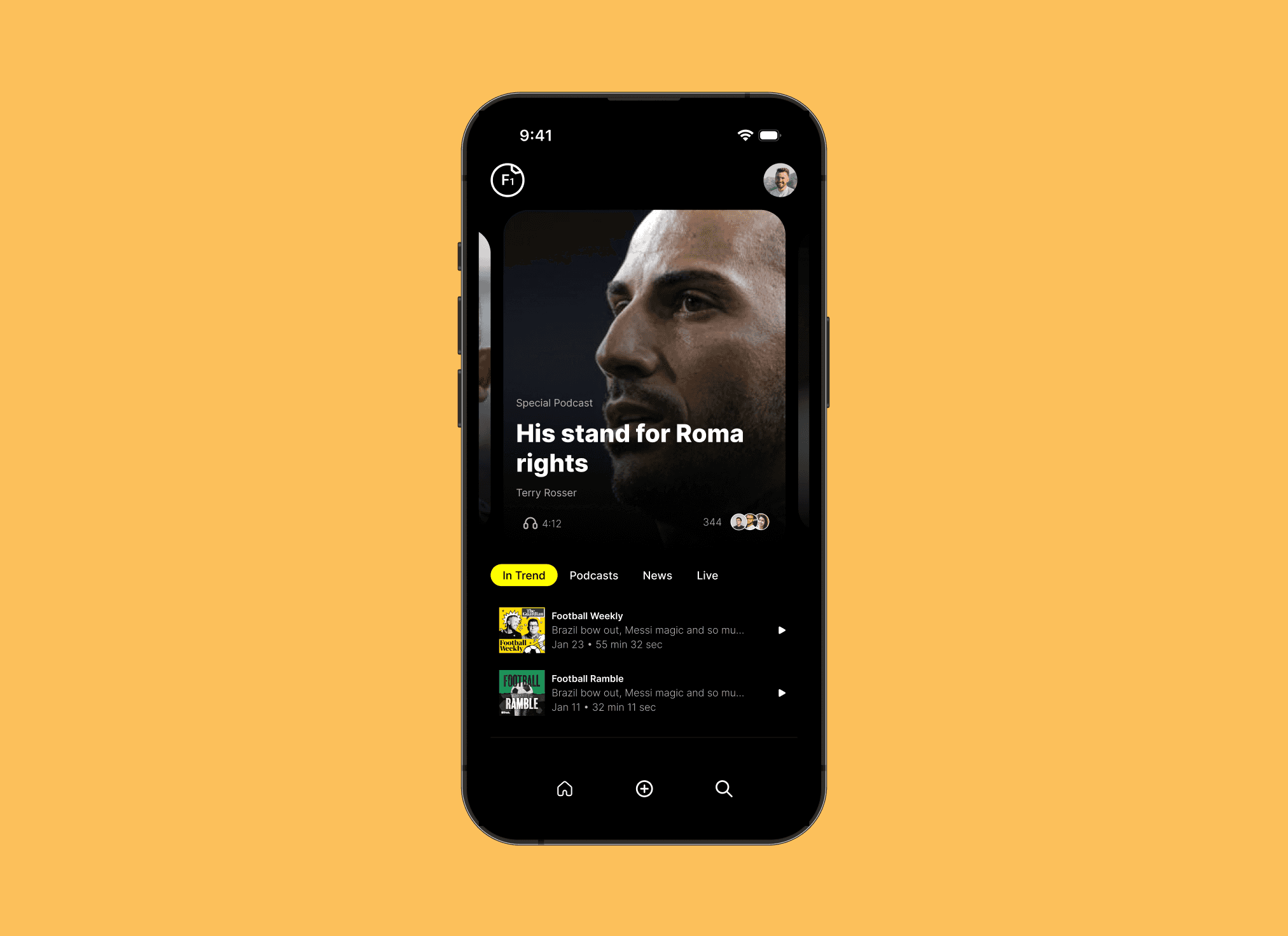
The app existed, but it had grown without design foundations. Built as an MVP with speed prioritised over structure, the product skipped prototyping and systematic design work — features were added directly, navigation evolved without planning, and components drifted across screens with no shared library or patterns. The result was inconsistent, hard to navigate, and difficult to scale. The core problem wasn't aesthetic — it was architectural. Users couldn't find what they needed. The navigation had grown organically as features were added, with no underlying logic to guide where things belonged. There was no design system, no established flow templates, no shared understanding of how screens should be structured. This made every new feature a negotiation. My task was to define the information architecture from zero and build the foundations the product needed to grow properly. I res
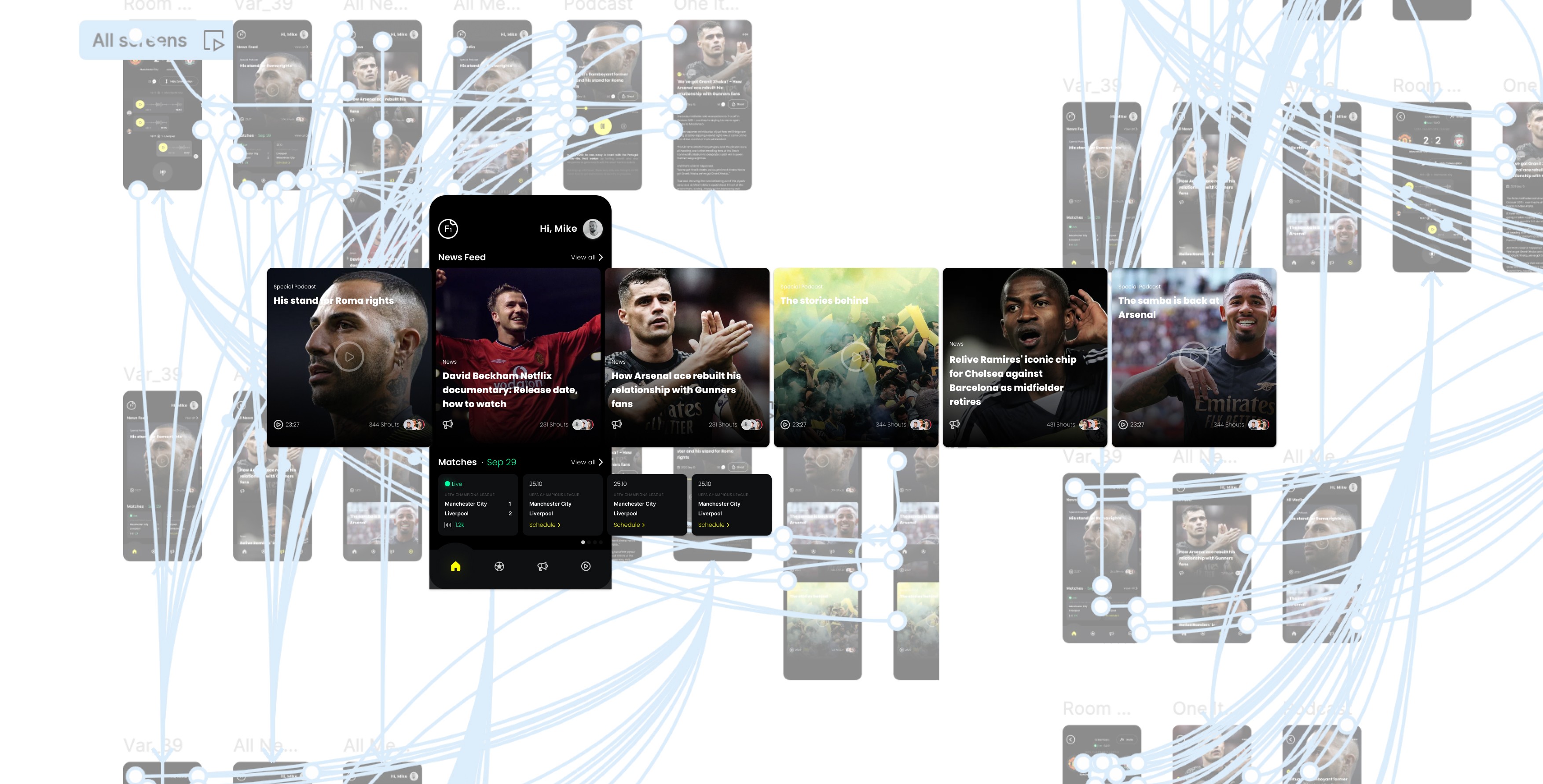
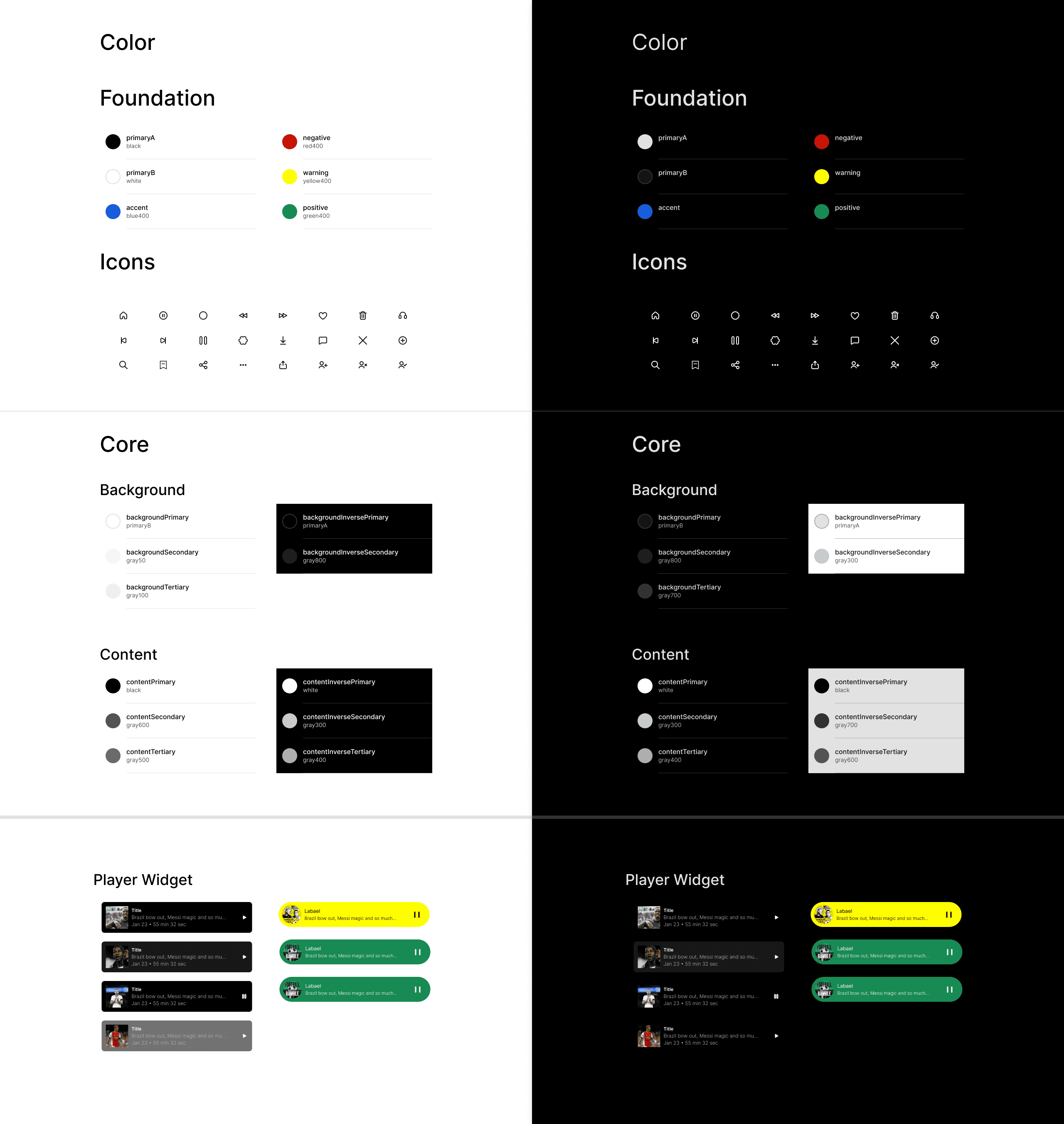
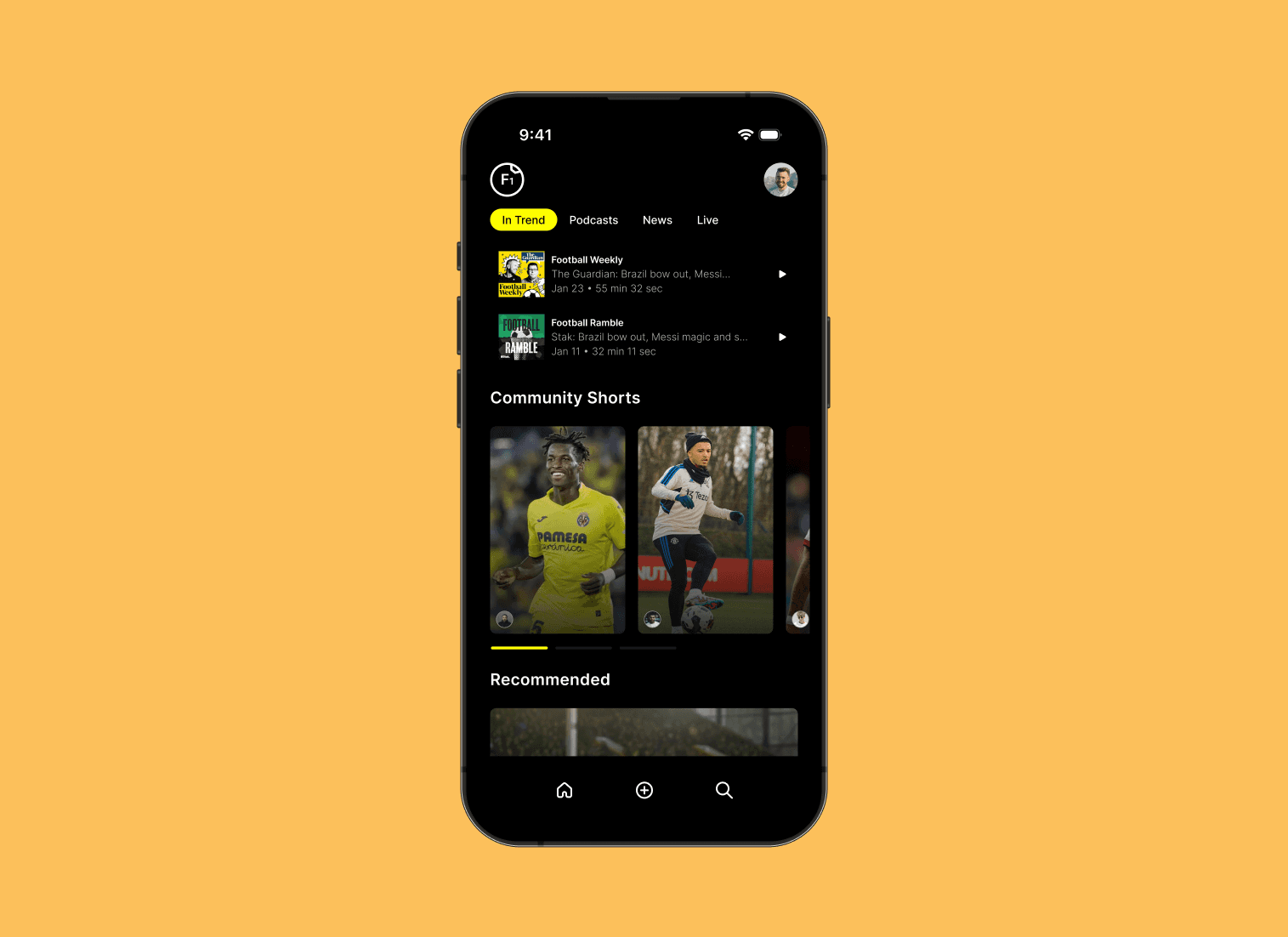
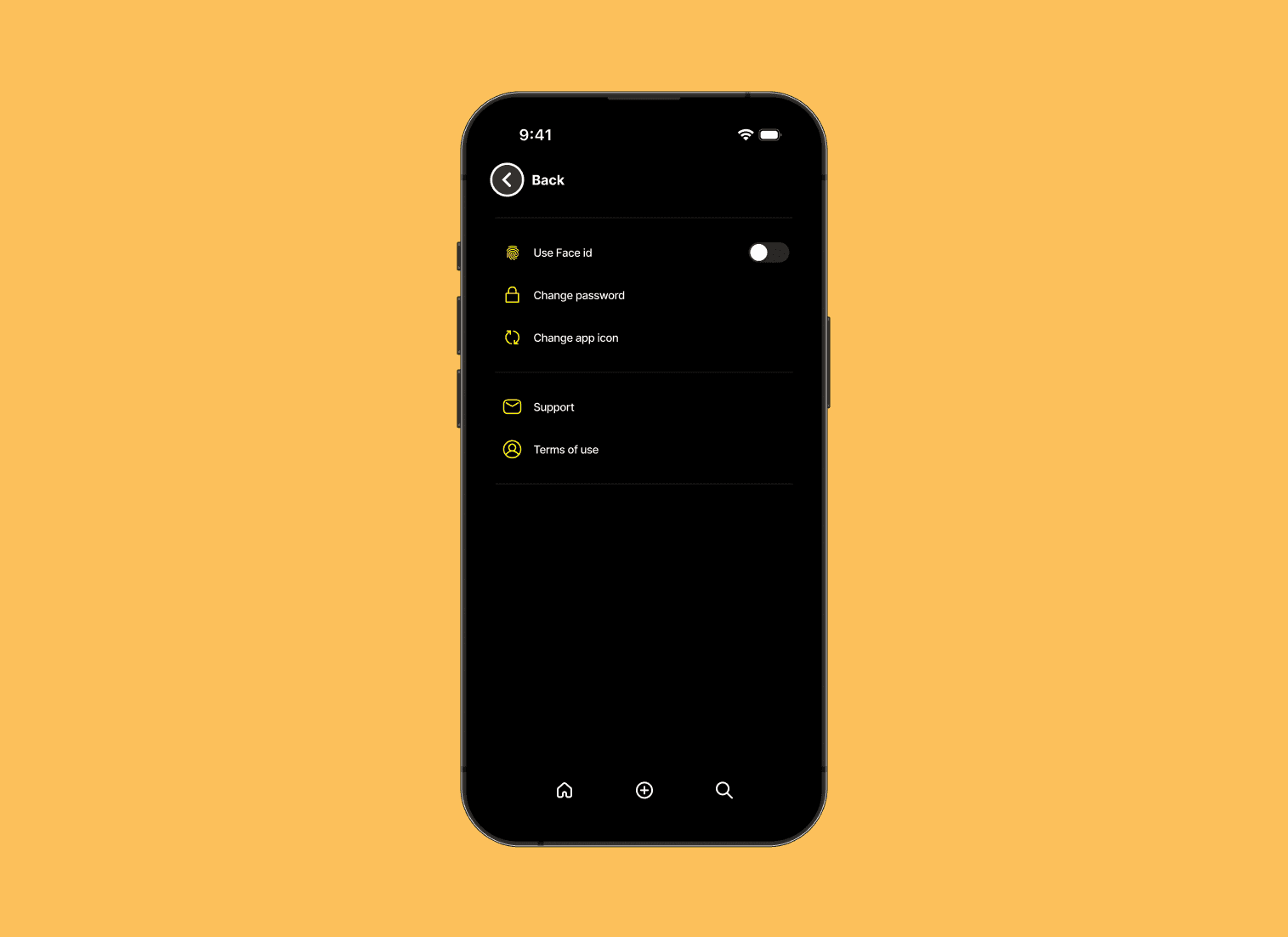
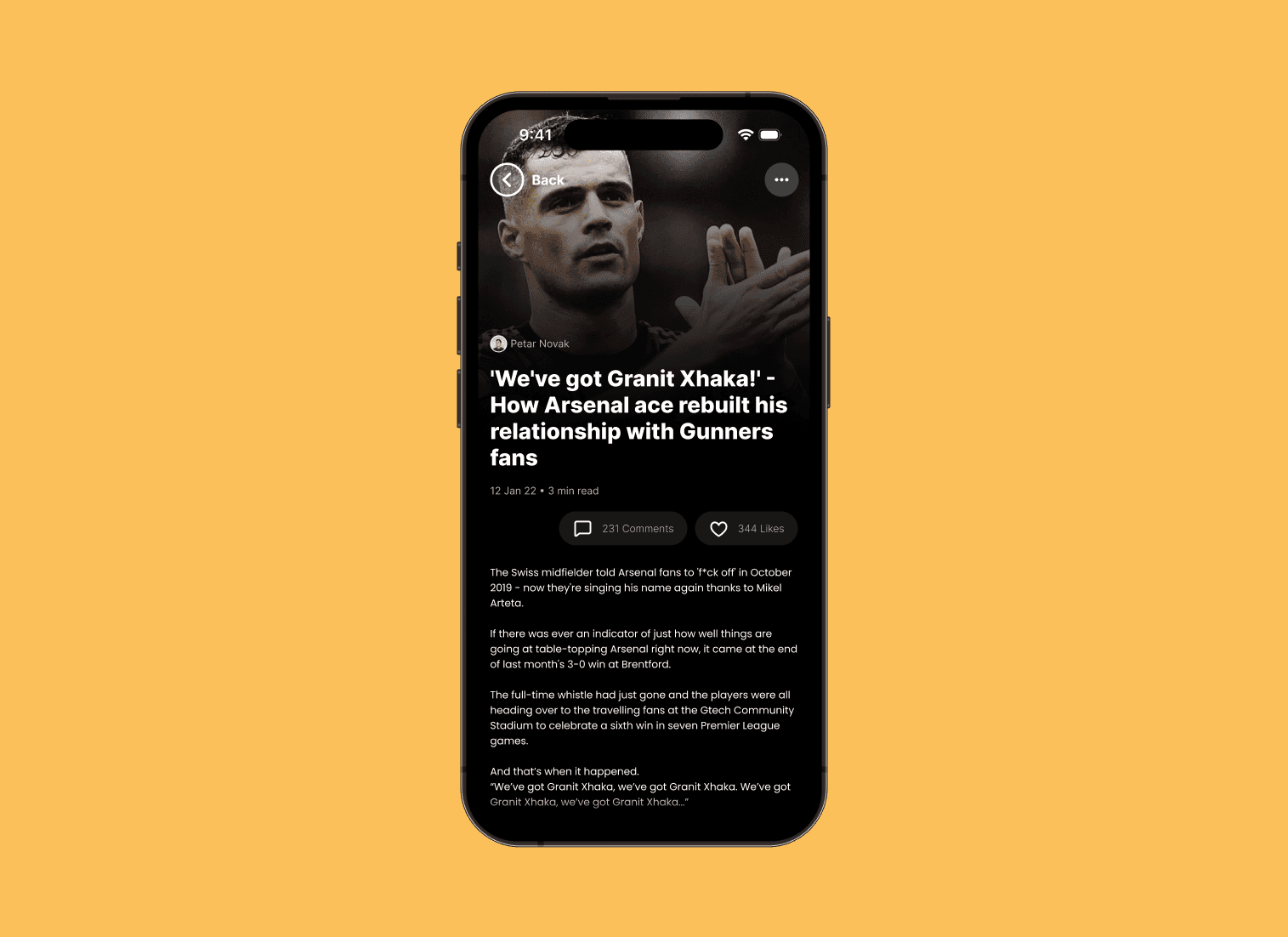
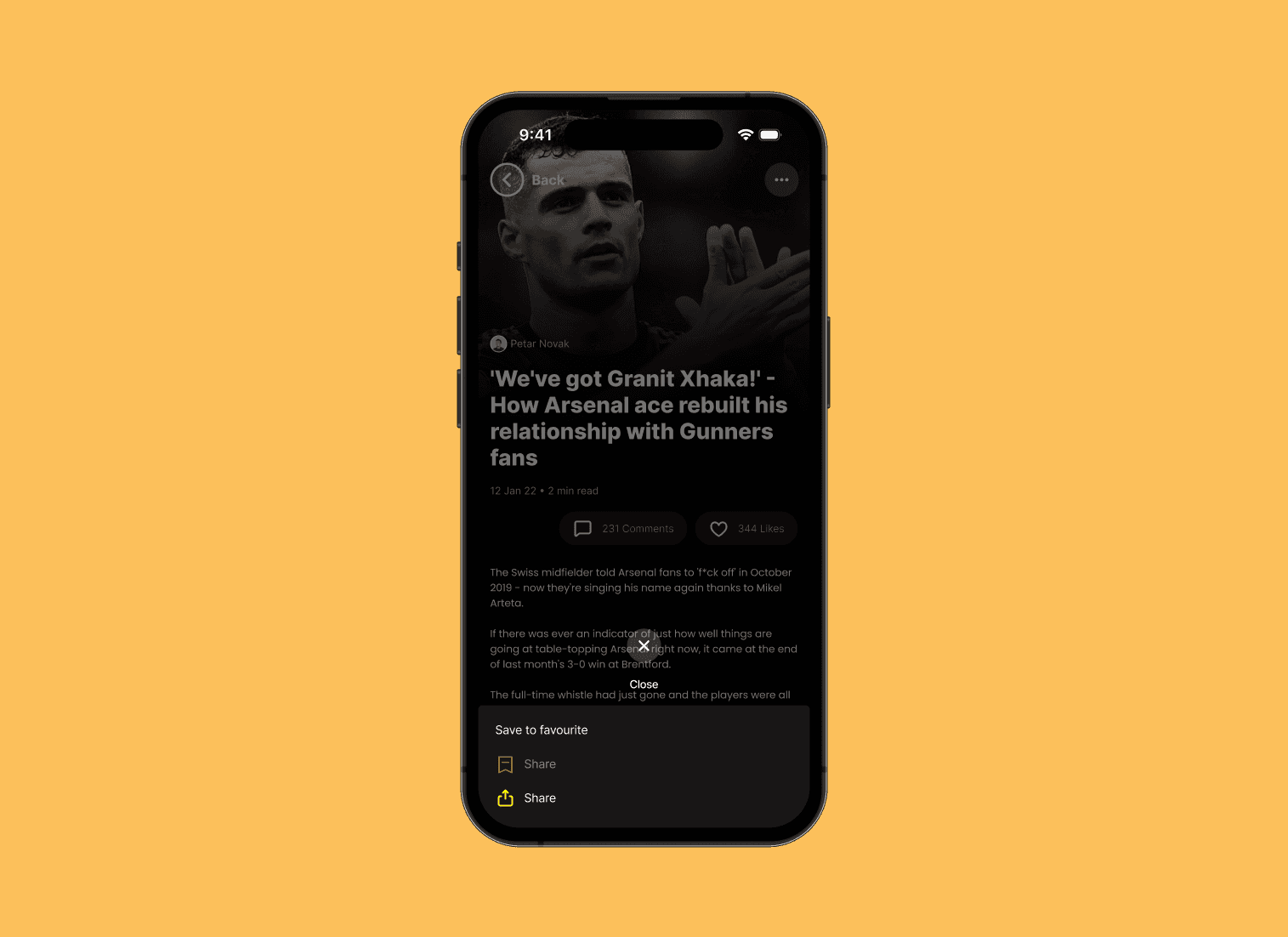
The project delivered a structured prototype covering core flows — news feed, match section, profile, and the live podcast experience — at fidelity suitable for moderated usability testing. Alongside it: a documented design system foundation for both themes and a clear architectural framework the product team could build on. The prototype was not taken to production within the project timeline. The architecture and system work remain the validated foundation for future development. Moving from chaotic navigation to structured IA required deciding what the product actually was at its core: a media app with audio, not an audio app with media. That decision drove every structural choice that followed. The design system gave the team repeatable components and patterns they didn't have before, turning ad-hoc screen building into a systematic process.